Generally, when people think of women's fiction, they think of the stereotypical romance novels with strong, shirtless men and beautiful "heaving bosom" women on the covers. However, romance fiction is simply a sub-genre of the umbrella genre of women's fiction, a genre that is as diverse as the women who read it.
(Continue reading)

Showing posts with label genre. Show all posts
Showing posts with label genre. Show all posts
25 June 2010


20 June 2010
Fiction Friday: mystery
Last week, you learned a little about literary fiction in the Fiction Friday series. This week, we learn about mystery. When people think of mystery fiction, the typical image is a detective or crime novel in a "whodunit" scenario. The narrator must solve the puzzle and catch the bad guy. However, there is more to the umbrella term "mystery" than the typical detective story.
(Continue reading)
(Continue reading)
13 June 2010
Fiction Friday: literary fiction
Literary fiction is a genre of fiction, but literary fiction is not genre fiction.
(Continue reading)
(Continue reading)
04 June 2010
Fiction Friday: what is genre fiction?
One of the things many writers ask as they write their novels is how to classify them. They want to know if their novel is women's fiction or historical fiction or thriller or fantasy, or exactly where in the bookstore their books would be shelved. In order to better classify your novel, it may help if you have a better understanding of literary genres.
(Continue reading)
(Continue reading)
16 March 2010
The freedom of knowing your niche
The process of The Artist's Way has been a very good one for me. I won't say I've had thunder and lightning changes the way others do, but I have felt myself changing in quieter ways. My spirituality and creativity are linked more closely, my faith is strengthened, and my writing life has been...clarified...to me. I know what I'm going to write now.
 I don't know that my writing path has a genre name the way some writers can declare Mystery or Young Adult or Speculative Fiction. But it's what I'm going to write. Let me explain my plan for the coffee house book. (And if you steal my idea, I will hunt you down. Fair warning.)
The coffee house book is a collection of vignettes that are threaded together by the owner of the coffee house and the coffee house itself. Each vignette will reveal something about the owner, as well as something about the coffee house.
This is how I decided to set up the coffee house book some time ago, and it's what I've been working toward. But an amazing, wonderful, scary thing happened this past week. I got about seven additional project ideas that seem to go along with how I've set up the coffee house book. (Looks like I know what I'm writing for the next seven years or so.)
When I first started getting the ideas, I was afraid it was my brain's attempt to sidetrack me from the coffee house book. But something else strange happened. As I was getting these ideas (and they were half-developing in my head), I was excited about them, but I didn't want to stop my current projects to jump into one of these new ones. Instead, I wanted to finish the coffee house book so I could start the next one.
The ideas came because this is the way I'm supposed to be writing. This is my niche. And once I discovered it, my creativity opened up in the form of these ideas, and the progress I'm making on the coffee house book!
It's a wonderfully freeing feeling to know you're on the right path.
--
Image: Suat Eman / FreeDigitalPhotos.net

The coffee house book is a collection of vignettes that are threaded together by the owner of the coffee house and the coffee house itself. Each vignette will reveal something about the owner, as well as something about the coffee house.
This is how I decided to set up the coffee house book some time ago, and it's what I've been working toward. But an amazing, wonderful, scary thing happened this past week. I got about seven additional project ideas that seem to go along with how I've set up the coffee house book. (Looks like I know what I'm writing for the next seven years or so.)
When I first started getting the ideas, I was afraid it was my brain's attempt to sidetrack me from the coffee house book. But something else strange happened. As I was getting these ideas (and they were half-developing in my head), I was excited about them, but I didn't want to stop my current projects to jump into one of these new ones. Instead, I wanted to finish the coffee house book so I could start the next one.
The ideas came because this is the way I'm supposed to be writing. This is my niche. And once I discovered it, my creativity opened up in the form of these ideas, and the progress I'm making on the coffee house book!
It's a wonderfully freeing feeling to know you're on the right path.
--
Image: Suat Eman / FreeDigitalPhotos.net
11 September 2009
P.S. from Nathan
On the heels of this week's Fiction Friday post about publishing trends, literary agent and awesome guy Nathan Bransford pointed readers to this article (which points readers to this article) about the up and coming trend: Amish romances, or "bonnet books."
I'm curious what it is that draws people to these books. I'm also curious if this new subgenre will improve sales for other Christian romance writers, such as Janette Oke.
I'm curious what it is that draws people to these books. I'm also curious if this new subgenre will improve sales for other Christian romance writers, such as Janette Oke.
01 August 2008
The Elements of Speculative Fiction
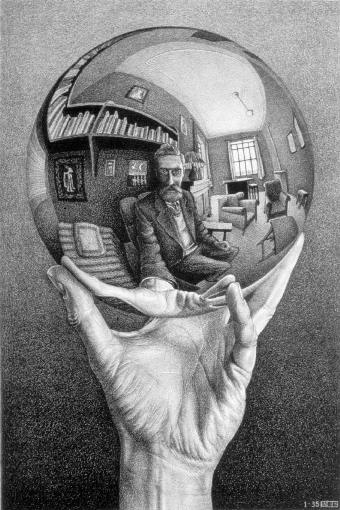 This isn't what you think.
I say "Speculative Fiction," and people give me blank stares. "What's that?" they ask. "Oh, you know - sci fi, fantasy, that sort o' thing." Depending on the person, we either move into starry-eyed "here there be dragons/spaceships!" territory, or the lip curls. "Oh, that. Fluffy stuff. Not serious literature."
Really? How fluffy is Homer? Read 1984 and had political nightmares? Jorge Luis Borges seemed pretty serious to me, as did Mary Shelley. My college professors surely took Faust, Dante's Inferno, and The Metamorphosis seriously.
What I'm saying is this: you've read speculative fiction, and no matter how discriminating your tastes, you've liked it.
Speculative fiction isn't merely a genre: it's a horde. It's a multitude. It's a legion. It's anything and everything with a strong streak of the fantastic.
This genre is all about "What if?" What if alchemy really worked? What if magic were real? What if superpowers existed? What if history had taken an entirely different course? What if artificial intelligence were fully developed? What if... but you've got the idea.
The only requirement for speculative fiction is this: it must be based upon something extraordinary.
You'd think it'd be easy, then. It's not.
Too many writers throw in some weird element - "The detective has a cat who actually talks!!1!" - and think that's enough. That's not speculative fiction, that's the author being a putz. Here's the simple test to see if what you've got is speculative fiction or just another plain vanilla story with a swirl of chocolate smudged in: remove the fantastic element.
That's right. Yank it out. What happens to the story? If it doesn't collapse like a bad alibi, if the entire ediface doesn't come crashing down, if nothing fundamentally changes, you haven't got speculative fiction.
All right? Does your speculative element infuse the entire story, giving it its structure? Impossible to make the story work without it? Good. Now don't screw it up.
Your speculative element had better be plausible. It can be totally absurd, so divorced from reality it's like they weren't ever married, but it has to make sense within the tale. Your reader should have no choice but to accept it as real.
Never explain it away, unless the explanation is more extraordinary than the element itself. I've seen far too many writers fall into the "main character was actually insane," "it was all a dream," "there was a perfectly ordinary explanation for all that weird shite" trap. Don't promise your reader haute cuisine and whip the cover away to reveal a McDonald's cheeseburger. You might think you're Mister Clever Dick, but the reader will just think you're a dick.
Avoid deus ex machina like a disgusting relative. The temptation with speculative fiction is to pull miracles from nowhere to solve knotty plot problems - after all, if you're working with incredible powers and really real gods, anything can happen, right? Wrongo. You'll kill your story dead with that. Even the fantastic has to have limitations, or there's no plausibility, no tension, and no intrigue. No gods from machines. Nada.
Do the hard thinking. And it is hard. You're dealing with things you can't research. You can't experience this stuff directly - if you can, it's not speculative, now, is it? So you have to extrapolate. Spin out the web of possibilities. What are the consequences of your speculative element? You'd be surprised what unexpected things can change. The world with this element in it isn't going to be the same world without it. Think of how things like cell phones and electricity have pervaded society, sending it off into directions no one expected. Remember the law of unintended consequences. You can bet your readers will.
There's more, but I'll leave that to other writers. Start with Orson Scott Card's How to Write Science Fiction and Fantasy. There's no better book on the subject. Granted he's focused on just two bits of the speculative fiction universe, but what he says holds true for all of it.
So why do this to yourself? Why work so damned hard making bizarre stuff up when you could just write something realistic and be done with it?
Nothing unleashes the imagination like speculative fiction. Nothing allows you such power, scope and freedom. There are no boundaries but the ones you create. No conventions but the ones you choose to break. You can say the most profound and important things without sounding like a prime laxative case: the enormous social questions, the really tough dilemmas, go down easier when they're presented through SF's prism (just remember you're telling a story, not delivering a lecture, or no amount of speculation will save you). It allows you to really explore the world, humanity, and the meaning of life. And it's bags of fun to look at the world from unexpected angles.
You hold worlds in your hands no one has ever seen before. You could do something wonderful.

Speculative fiction isn't merely a genre: it's a horde. It's a multitude. It's a legion. It's anything and everything with a strong streak of the fantastic.
This genre is all about "What if?" What if alchemy really worked? What if magic were real? What if superpowers existed? What if history had taken an entirely different course? What if artificial intelligence were fully developed? What if... but you've got the idea.
The only requirement for speculative fiction is this: it must be based upon something extraordinary.
You'd think it'd be easy, then. It's not.
Too many writers throw in some weird element - "The detective has a cat who actually talks!!1!" - and think that's enough. That's not speculative fiction, that's the author being a putz. Here's the simple test to see if what you've got is speculative fiction or just another plain vanilla story with a swirl of chocolate smudged in: remove the fantastic element.
That's right. Yank it out. What happens to the story? If it doesn't collapse like a bad alibi, if the entire ediface doesn't come crashing down, if nothing fundamentally changes, you haven't got speculative fiction.
All right? Does your speculative element infuse the entire story, giving it its structure? Impossible to make the story work without it? Good. Now don't screw it up.
Your speculative element had better be plausible. It can be totally absurd, so divorced from reality it's like they weren't ever married, but it has to make sense within the tale. Your reader should have no choice but to accept it as real.
Never explain it away, unless the explanation is more extraordinary than the element itself. I've seen far too many writers fall into the "main character was actually insane," "it was all a dream," "there was a perfectly ordinary explanation for all that weird shite" trap. Don't promise your reader haute cuisine and whip the cover away to reveal a McDonald's cheeseburger. You might think you're Mister Clever Dick, but the reader will just think you're a dick.
Avoid deus ex machina like a disgusting relative. The temptation with speculative fiction is to pull miracles from nowhere to solve knotty plot problems - after all, if you're working with incredible powers and really real gods, anything can happen, right? Wrongo. You'll kill your story dead with that. Even the fantastic has to have limitations, or there's no plausibility, no tension, and no intrigue. No gods from machines. Nada.
Do the hard thinking. And it is hard. You're dealing with things you can't research. You can't experience this stuff directly - if you can, it's not speculative, now, is it? So you have to extrapolate. Spin out the web of possibilities. What are the consequences of your speculative element? You'd be surprised what unexpected things can change. The world with this element in it isn't going to be the same world without it. Think of how things like cell phones and electricity have pervaded society, sending it off into directions no one expected. Remember the law of unintended consequences. You can bet your readers will.
There's more, but I'll leave that to other writers. Start with Orson Scott Card's How to Write Science Fiction and Fantasy. There's no better book on the subject. Granted he's focused on just two bits of the speculative fiction universe, but what he says holds true for all of it.
So why do this to yourself? Why work so damned hard making bizarre stuff up when you could just write something realistic and be done with it?
Nothing unleashes the imagination like speculative fiction. Nothing allows you such power, scope and freedom. There are no boundaries but the ones you create. No conventions but the ones you choose to break. You can say the most profound and important things without sounding like a prime laxative case: the enormous social questions, the really tough dilemmas, go down easier when they're presented through SF's prism (just remember you're telling a story, not delivering a lecture, or no amount of speculation will save you). It allows you to really explore the world, humanity, and the meaning of life. And it's bags of fun to look at the world from unexpected angles.
You hold worlds in your hands no one has ever seen before. You could do something wonderful.
Subscribe to:
Posts (Atom)